Your site has no electrical grid. No power lines within reach, no substation planned, no utility company serving the area. You need lighting that works completely on its own — tonight, tomorrow night, and every night for the next decade — in conditions that would destroy ordinary equipment.
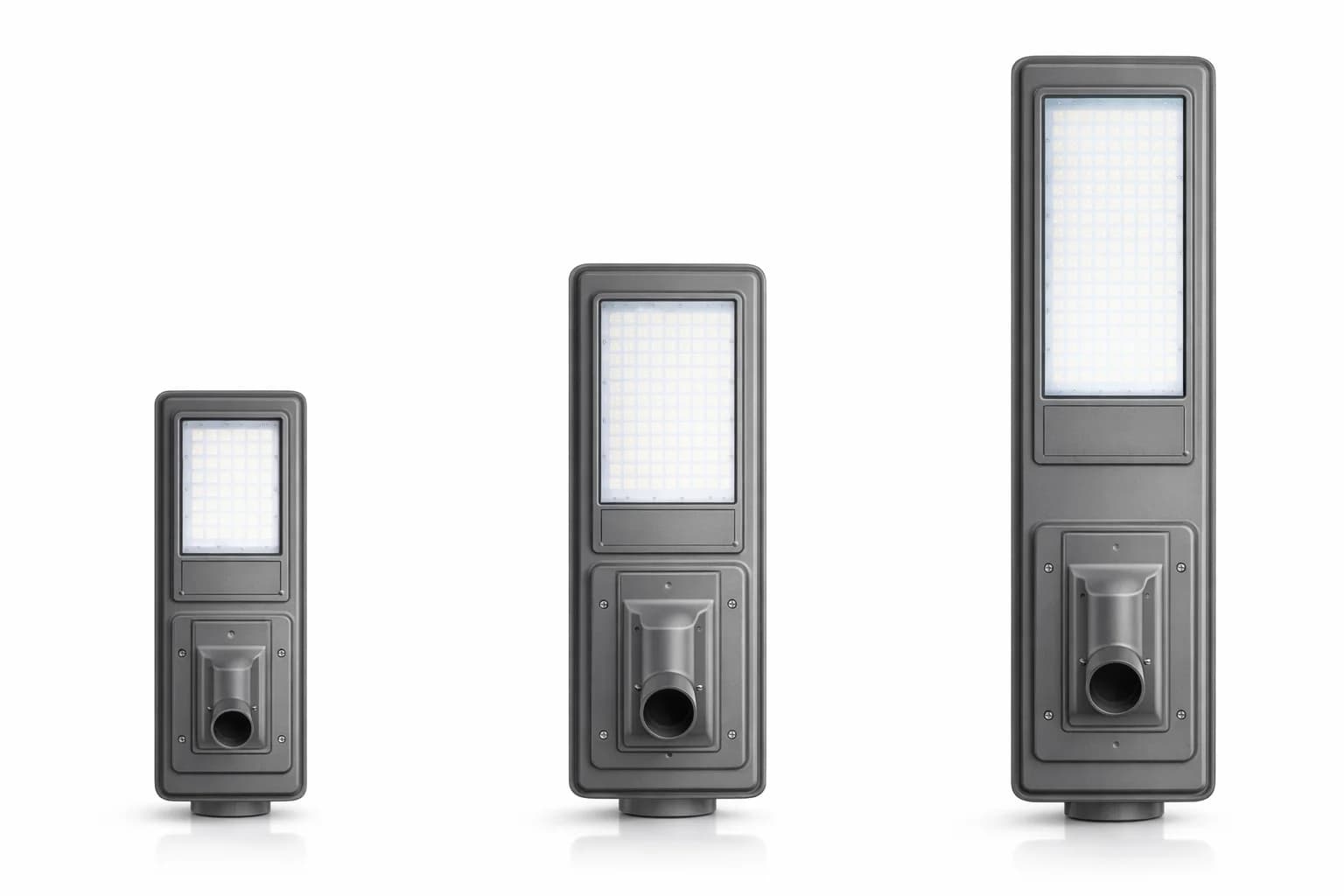
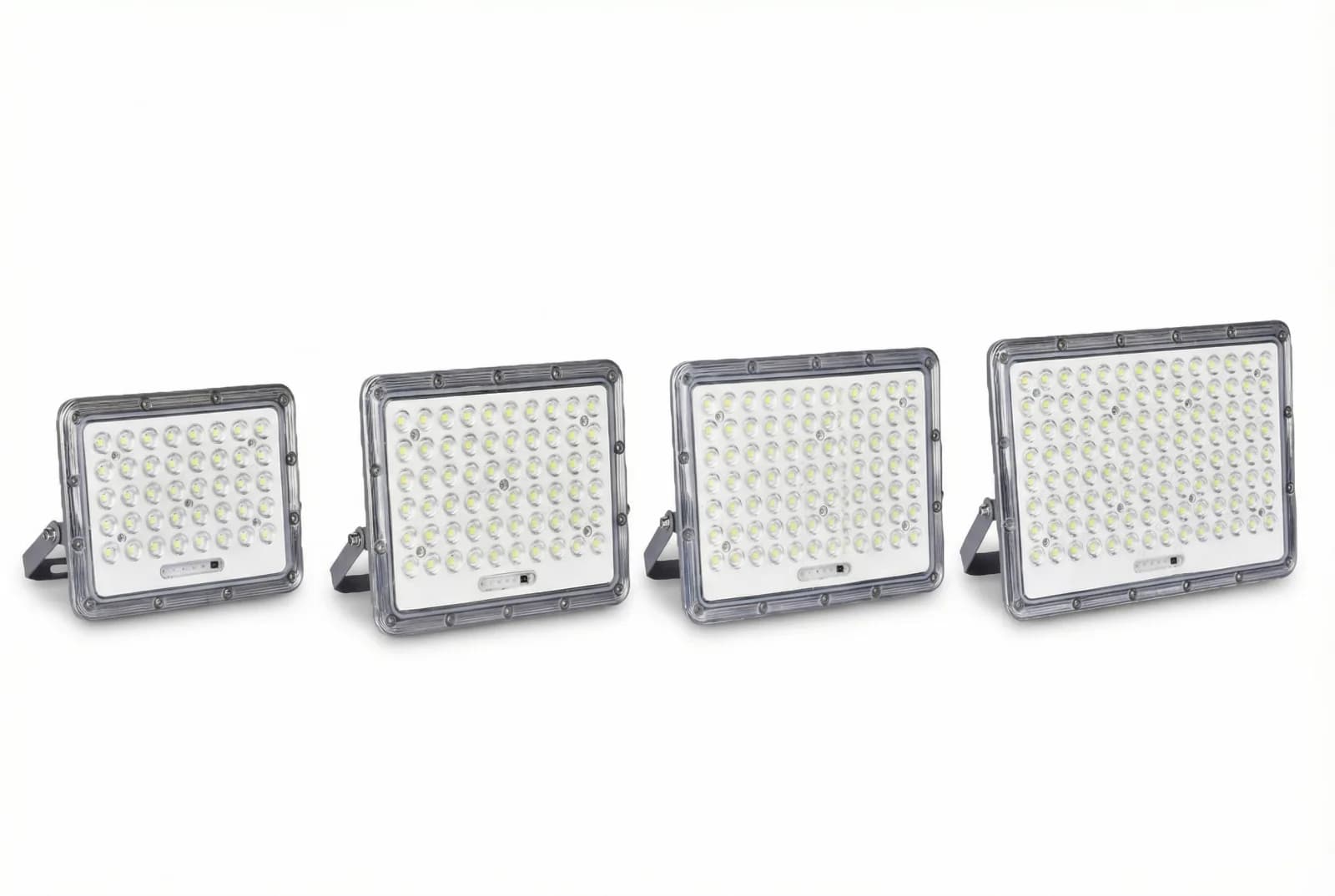
We manufacture solar street lights and solar flood lights engineered specifically for zero-infrastructure environments: desert mining camps, island communities, mountain research stations, refugee settlements, and disaster response zones. Every fixture is an independent power station — solar panel, LiFePO4 battery, charge controller, LED module — sealed in one housing, mounted on one pole, operating with zero external input.
This page covers the engineering behind off-grid solar lighting: what makes it different from ordinary solar, which configurations we recommend for specific off-grid scenarios, and why it eliminates diesel generators permanently.
Why Off-Grid Lighting Requires Different Engineering
Off-grid is not "solar as a nice-to-have." It is solar as the only option. That distinction changes every engineering decision.
Zero Infrastructure Means Zero Safety Net
In urban or rural-grid areas, a cloudy week means the solar light dims and the grid fills the gap. Off-grid has no gap-filler. If the battery dies on night 4 of overcast skies, the site goes dark — completely dark. A mining road without lighting is a fatality waiting to happen. A refugee camp without lighting is a security crisis. Off-grid battery sizing must account for worst-case solar conditions, not averages.
Extreme Environments Are the Norm
Off-grid locations tend to be off-grid precisely because the environment is hostile. Saharan construction camps hit 55°C. Antarctic research stations drop below -30°C. Pacific islands receive daily salt spray. Mountain passes face 120 km/h winds. Equipment that works in a suburban parking lot fails catastrophically in these conditions. Every material, seal, and chemical compound must be selected for the specific environment.
Maintenance Is Effectively Impossible
When the nearest qualified technician is a 2-day journey away, "schedule a maintenance visit" is not a plan. Off-grid lighting must operate autonomously for years. That means batteries that do not degrade in extreme temperatures, LED modules that do not burn out prematurely, and a system architecture where the rare failure of one component does not cascade into system-wide shutdown.
Logistics Are a Major Cost Factor
Shipping 50 fixtures to a port city is routine. Shipping 50 fixtures to an island atoll, a mountaintop mine, or a flooded disaster zone is a logistical operation. Every kilogram of fixture weight, every centimeter of packaging volume, and every complexity of on-site assembly adds cost and delay. The product must be compact, light, and installable by whoever is already there.
Theft and Vandalism Threaten Remote Assets
Unmonitored equipment in remote locations attracts theft. External battery boxes are particularly vulnerable — they contain valuable lithium cells. Any off-grid lighting design with a separate, accessible battery enclosure is inviting theft that disables the entire system.
How We Engineer for Zero Infrastructure
Every Beamfact off-grid fixture is designed around one principle: total autonomy under worst-case conditions. Not average conditions. Not "typical" conditions. The worst month of solar irradiance, the coldest night, the longest storm — that is the design target.
LiFePO4: The Only Responsible Battery Chemistry for Off-Grid
We use lithium iron phosphate (LiFePO4) exclusively for off-grid deployments. The reasons are non-negotiable:
- Discharge range: -20°C to 60°C — unlike ternary lithium that loses half its capacity below freezing, LiFePO4 retains 80%+ at -20°C
- Zero thermal runaway risk — in a location without fire response, a battery that cannot catch fire is not a feature; it is a requirement
- 2,000+ charge cycles — 5-7 years of nightly operation before capacity drops to 80%, meaning no battery replacement visits for half a decade
- Flat discharge curve — consistent voltage output means consistent light output from dusk to dawn, not a slow dim through the night
5-Day Autonomy as Standard
We size every off-grid configuration for 5 consecutive nights of operation with zero solar input. This is not a theoretical maximum — it is the guaranteed minimum. Our sizing methodology:
- Calculate nightly energy consumption (LED wattage × hours at each brightness mode)
- Multiply by 5 (autonomy days)
- Add 20% reserve (battery should never fully deplete — deep discharge shortens LiFePO4 lifespan)
- Size the solar panel to recover the full 5-day deficit within 2-3 recovery days of partial sun
For our BF-SSL-22-120W street light in a 5-day autonomy configuration, this means a 120W panel paired with a 480Wh LiFePO4 battery — enough stored energy for 5 full nights at rated output, with the panel capacity to recover quickly once the sun returns.
Built for Extremes: IP65, robust wind rated Wind
Off-grid fixtures face conditions that urban fixtures never encounter. Our engineering responses:
| Environmental Threat | Engineering Response | Rating |
|---|---|---|
| Sand and dust ingress | Fully sealed gasket housing | IP65 |
| Torrential rain / flooding | Sealed enclosure resistant to water jets from all directions | IP65 |
| Hurricane-force winds | Reinforced aluminum alloy frame, aerodynamic profile | robust wind rated |
| Salt spray corrosion | Marine-grade anodized aluminum, stainless steel fasteners | ISO 9227 salt spray tested |
| Extreme UV degradation | UV-stabilized polycarbonate lens, powder-coated surfaces | 10+ year UV resistance |
Anti-Theft Mounting Hardware
Every off-grid shipment includes our anti-theft mounting kit:
- Tamper-proof security bolts requiring a proprietary tool (shipped separately to the project manager)
- Integrated all-in-one design — battery sealed inside the fixture housing, nothing external to steal
- High-mount configuration (6-9M) — all components beyond reach without a lift vehicle
- Optional: epoxy-locked bolts and reinforced stainless steel brackets for extreme-risk sites
Recommended Configurations by Off-Grid Scenario
We have standardized three off-grid deployment packages based on the most common project types we supply. Each is field-proven and optimized for the specific logistical and environmental constraints of its scenario.
Scenario 1: Remote Community Electrification (20-50 Lights)
Settlements on islands, in mountain valleys, or at the edge of road networks — permanent communities that need permanent lighting but have no grid timeline.
| Parameter | Specification |
|---|---|
| Street Lighting | BF-SSL-20-65W (paths) + BF-SSL-22-80W (main roads) |
| Luminous Output | 3,800 LM (paths) / 5,700 LM (main roads) |
| Solar Panel | 65W (paths) / 80W (main roads) |
| Battery | 3.2V LiFePO4, 240Wh (paths) / 288Wh (main roads) |
| Mounting Height | 4-6M (paths) / 6-7M (main roads) |
| Autonomy | 5 consecutive rainy days |
| Quantity | 20-50 units (mix of BF-SSL-20-65W and BF-SSL-22-80W based on layout) |
| Logistics | 20ft container, CIF to nearest port + local truck |
| Estimated Budget | $5,000 - $15,000 FOB (fixture quantity dependent) |
| Installation | Local crew, 1 week, no electrician needed |
Scenario 2: Mining / Construction Camp (Street + Flood Lights)
Temporary or semi-permanent operations that need road lighting plus high-intensity work area illumination. Equipment must survive dust, vibration, and rough handling.
| Parameter | Specification |
|---|---|
| Road Lighting | BF-SSL-21-90W × 10-20 units |
| Luminous Output (Road) | 5,700 LM per unit |
| Work Area Floods | BF-SFL-27-100W × 6-10 units |
| Luminous Output (Flood) | 11,400 LM per unit |
| Solar Panel | 90W (street) / as spec'd (flood) |
| Battery | 3.2V LiFePO4, 288Wh (street) |
| Mounting Height | 6-8M (street) / 5-7M (flood on portable mast) |
| Autonomy | 5 consecutive rainy days |
| Quantity | 16-30 units total (mixed street + flood) |
| Logistics | Single 20ft container with all fixtures + portable flood masts |
| Estimated Budget | $8,000 - $22,000 FOB |
| Installation | Site crew, 2-3 days, relocatable flood mounts |
Scenario 3: Disaster Relief / Emergency Deployment (Container-Load Kit)
Pre-configured rapid-deployment kits for humanitarian organizations, military logistics, and government disaster agencies. Every unit is factory-programmed and ready to install on arrival.
| Parameter | Specification |
|---|---|
| Street Lighting | BF-SSL-20-65W × 150-200 units (pre-configured) |
| Area Floods | BF-SFL-26-60W × 30-50 units (pre-configured) |
| Luminous Output | 3,800 LM (street) / 4,750 LM (flood) |
| Solar Panel | 65W (street) / as spec'd (flood) |
| Battery | 3.2V LiFePO4, 240Wh (street) |
| Mounting Height | 4-6M (street, lightweight poles included) / ground or tripod (flood) |
| Autonomy | 5 consecutive rainy days |
| Quantity | 180-250 units per 20ft container |
| Logistics | Pre-packed 20ft container, ship within 7-10 days of order |
| Estimated Budget | $30,000 - $55,000 FOB per container load |
| Installation | Untrained personnel, pictorial guide, 30 min per unit |
All configurations use LiFePO4 batteries, light+time control with factory pre-programming, and are rated for -20°C to 60°C operation.
Need a site-specific layout? Send us your GPS coordinates, site dimensions, and required lighting levels. We analyze local solar irradiance (worst-month GHI), calculate exact battery and panel sizing, and deliver a complete deployment plan — fixture positions, wattage per zone, logistics routing, and landed cost — at no charge. Get Off-Grid Lighting Assessment.
Engineering Data and Certifications
We back every off-grid claim with measurable data, not marketing language.
From our off-grid product specifications:
- LiFePO4 discharge temperature range: -20°C to 60°C (all BF-SSL / BF-MSS / BF-SFL series)
- Battery cycle life: 2,000+ cycles to 80% capacity (5-7 years nightly dusk-to-dawn)
- BF-SSL-22-120W output: 7,600 LM
- BF-SFL-27-150W output: 15,200 LM for high-intensity area illumination
- Wind resistance: robust wind rated
- Ingress protection: IP65 (dust-tight, water jet protected)
Certifications applicable to off-grid projects:
- CE (European Conformity)
- IP65 (dust-tight and water jet protection)
- RoHS (Environmental Compliance)
- UN38.3 (Battery Transport Safety)
- ISO 9001 / ISO 14001 (Quality and Environmental management)
We provide full test reports and certificates with every quotation. For projects requiring country-specific certifications (SONCAP for Nigeria, BIS for India, SASO for Saudi Arabia), we arrange testing on request.
For an independent quality evaluation guide, see: 9-Point Quality Checklist for Buying Solar Lights from China.
Solar vs Diesel Generator: Total Cost of Ownership for Off-Grid Lighting
In off-grid locations, the only alternative to solar is diesel generator-powered lighting. We calculated total cost of ownership for a mid-scale off-grid installation (30 street lights + 10 flood lights) over 5 years.
| Cost Factor | Diesel Generator + Grid Lights | Solar (Ours) |
|---|---|---|
| Generator (25kVA) | $5,000 - $8,000 | $0 |
| Fixtures (40 units) | $2,000 - $3,500 | $10,000 - $20,000 |
| Wiring + Distribution | $5,000 - $10,000 | $0 (each unit independent) |
| Installation (electrician) | $3,000 - $5,000 | $800 - $1,500 (local crew) |
| Upfront Total | $15,000 - $26,500 | $10,800 - $21,500 |
| Fuel per year ($0.50-1.00/kWh) | $5,000 - $12,000 | $0 |
| Generator maintenance per year | $1,500 - $3,000 | $0 |
| Fuel transport to remote site per year | $1,000 - $4,000 | $0 |
| Bulb replacement per year | $400 - $800 | $0 |
| 5-Year Running Cost | $39,500 - $99,000 | $0 - $500 |
| 5-Year Grand Total | $54,500 - $125,500 | $10,800 - $22,000 |
| Savings with Solar | — | $43,700 - $103,500 (80-82%) |
Beyond Cost: Operational Factors That Diesel Cannot Solve
| Factor | Diesel Generator | Solar |
|---|---|---|
| Fuel supply chain required | Yes — weekly refueling | No |
| Operates during fuel shortages | No — lights go dark | Yes — always |
| Noise level | 65-85 dB (constant) | 0 dB |
| Carbon emissions | 2.7 kg CO₂ per liter burned | Zero |
| Fire / spill risk | Fuel storage hazard | None |
| Single point of failure | Generator fails = all lights fail | Each unit independent |
| Nighttime refueling | Required for 24/7 operation | N/A |
The critical off-grid difference: In urban areas, generator failure means an inconvenience. In off-grid locations, generator failure during a fuel shortage means no lighting at all until a fuel truck arrives — which could be days or weeks. Solar eliminates this single point of failure entirely. Each fixture operates independently; even if one unit fails, the other 39 continue working.
For a detailed cost analysis of solar street light components, read: Solar Street Light Cost Breakdown: From BOM to FOB Price.
Get Off-Grid Lighting Assessment
Tell us about your off-grid site and we deliver a complete deployment plan:
- Solar irradiance analysis — worst-month GHI at your exact coordinates, battery sizing calculated to your required autonomy days
- Lighting layout — fixture positions, wattage per zone, mounting heights, and spacing mapped to your site dimensions
- Bill of materials — exact models (BF-SSL / BF-SFL series), quantities, poles, anti-theft hardware, and spare parts kit
- Logistics plan — packaging, container loading, shipping route, and landed cost estimate to your delivery point
- Project documentation — certificates, test reports, and specifications formatted for tender or grant submission
Two ways to start:
- Send us your GPS coordinates and site map for a custom off-grid lighting assessment (response within 48 hours)
- Describe your scenario (community / camp / emergency) and unit count — we provide a standard configuration quote