The Challenge: Farms Need Light Where the Grid Does Not Reach
Farms are inherently dispersed operations. Barns sit hundreds of meters from the main house. Livestock pens, storage yards, equipment sheds, and loading areas are scattered across the property. Access roads stretch for kilometers between fields and buildings. And crop fields — the economic heart of any farm — face nightly pest invasions that cost growers billions in damaged harvests and chemical pesticide applications every year.
Conventional grid-powered lighting fails farms on every front. Trenching cable across working agricultural land is expensive, disruptive to operations, and vulnerable to damage from plows, excavators, and heavy vehicles. Many farm structures stand too far from the electrical panel for cost-effective grid extension. Even where grid exists, rural power supply is often unreliable, with blackouts occurring precisely during the evening hours when lighting and pest control matter most.
The result: most farm operations worldwide operate in the dark after sunset. Barns are unsafe for nighttime livestock checks. Loading areas force workers to use handheld flashlights. Equipment theft from remote yards goes undetected. And nocturnal pest species — moths, beetles, plant bugs — feed and breed unchecked across unlit crop fields.
Our Solution: Three Product Lines, One Integrated Farm Lighting System
Beamfact approaches farm lighting as an integrated system, not a collection of standalone fixtures. We combine three product lines — solar street lights, solar flood lights, and solar insect killer lights — into a unified farm lighting strategy that addresses illumination, security, and pest management simultaneously.
Every fixture is fully grid-independent. Each unit generates its own power, stores it in LiFePO4 batteries rated for agricultural temperature extremes (-20 to 60 degrees Celsius), and operates autonomously from dusk to dawn. No cable runs between buildings, no electrical panels to upgrade, no monthly electricity costs.
Solar Street Lights — Access Roads and Farm Lanes
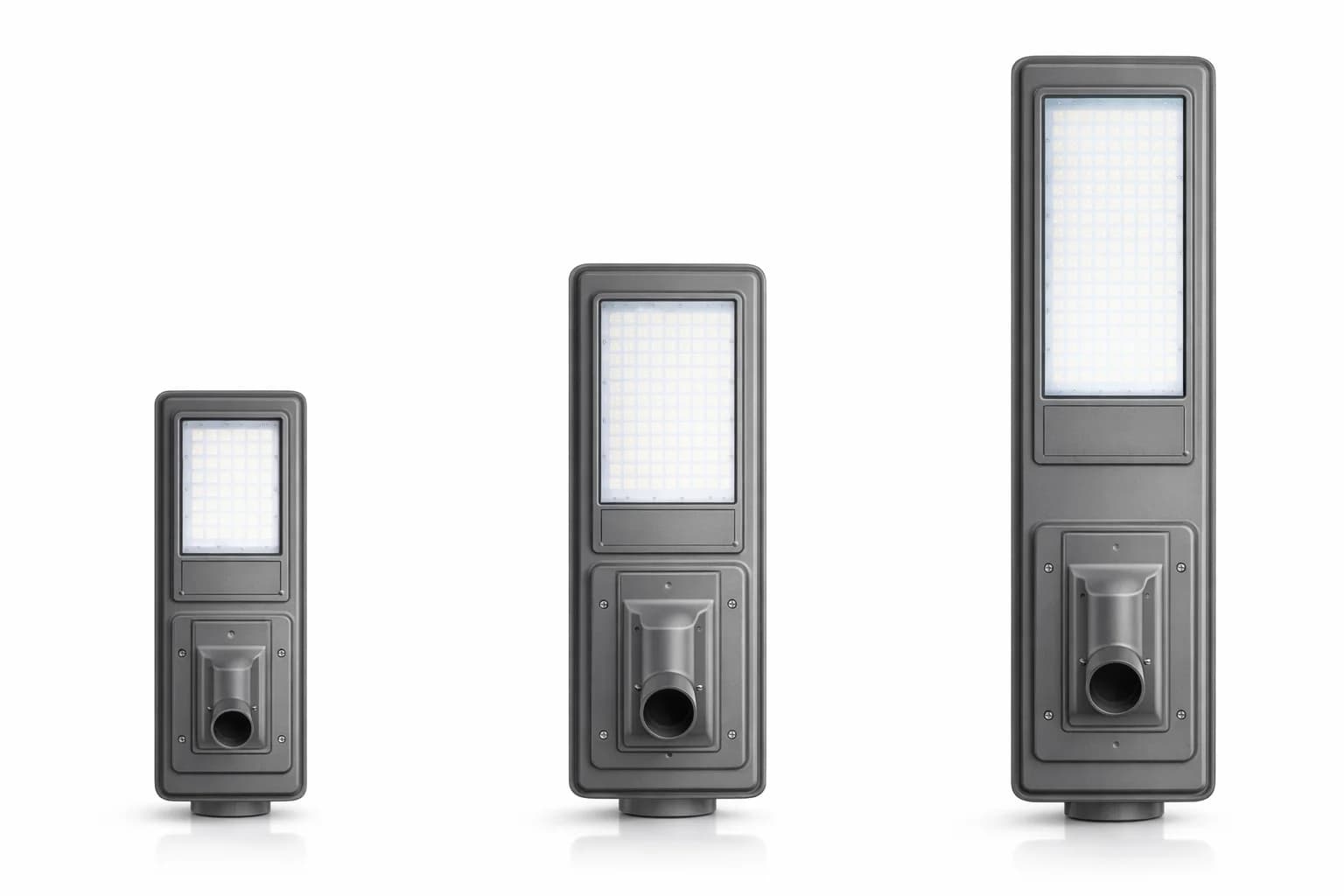
Our solar street light series, on 45-135W panels, mounts on 4-8 meter poles along access roads, farm lanes, and property perimeters. Each fixture illuminates a 20-25 meter stretch of road with uniform light distribution optimized for vehicle and pedestrian safety. Independent units mean you can light a new road section by adding a single pole — no trenching back to a junction box.
Solar Flood Lights — Barns, Yards, and Loading Areas
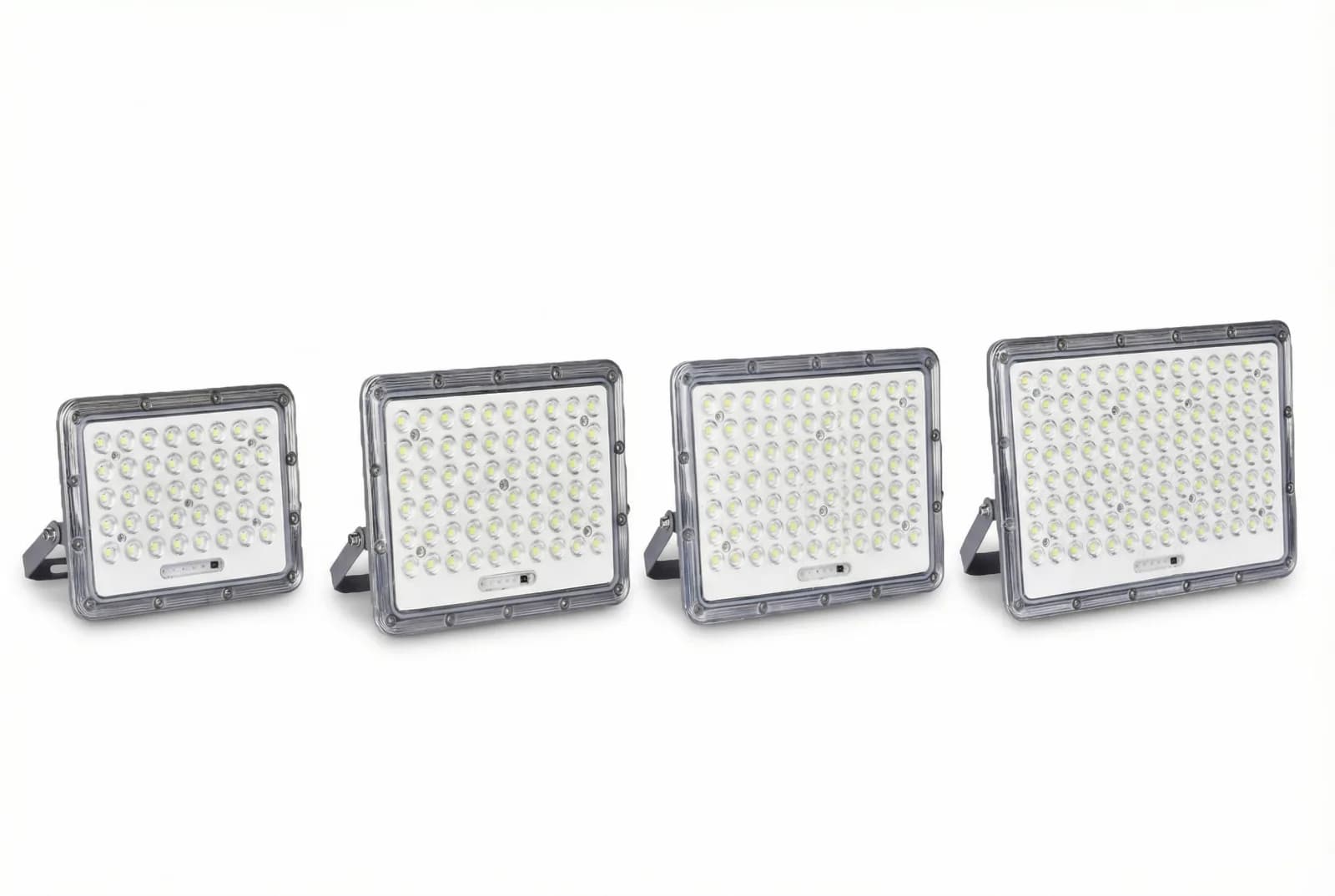
Our solar flood lights, on 20-150W solar panels, deliver high-intensity directed illumination for the concentrated work areas on a farm. Mount them on barn walls, equipment shed eaves, or dedicated poles at loading docks. The 120-degree beam spread covers large open yards from a single fixture, and the IP65 sealed housing handles the dust, moisture, and temperature swings that farm environments demand.
Solar Insect Killer Lights — Chemical-Free Crop Protection
This is where farm lighting becomes something more than illumination. Our solar insect killer lights combine UV pest attraction with a high-voltage elimination grid in a solar-autonomous fixture. Field-tested across 87+ pest families, these units achieve 70-90% population reduction for the nocturnal flying pests that devastate crops: rice stem borers, corn borers, fruit moths, diamondback moths, stink bugs, leafhoppers, and planthoppers.
Coverage per unit depends on terrain, pest density, and mounting height — contact our engineering team for a site-specific coverage assessment. The system operates without chemicals — no residue, no drift, no environmental contamination. For organic farming operations, this is not a nice-to-have; it is a necessity. Read our detailed solar insect killer field test results for pest-specific effectiveness data across three climate zones.
Why Beamfact for Farms
- 100% grid-independent with no cross-property cabling or trenching required
- IP65 agricultural-grade sealing against dust, rain, and pressure washing
- LiFePO4 batteries rated -20 to 60 degrees Celsius for all-season farm operation
- Integrated pest control that reduces chemical pesticide use by up to 60%
- Anti-theft mounting with tamper-resistant hardware for remote and unattended areas
- Zone-by-zone scalability to expand lighting as your operation grows
Farm Lighting Configuration by Scale
Every farm is different. A 5-hectare family vegetable plot has fundamentally different requirements than a 500-hectare commercial grain operation. We design farm lighting systems across three tiers, each with recommended product mixes and deployment densities. Tell us your plot size and layout and we will mark up which tier applies.
Small Family Farm (Under 10 Hectares)
A small farm typically needs lighting at 3-5 key points: the main barn, equipment storage, the house entrance, and 1-2 field zones for pest control.
| Zone | Product | Specification | Quantity |
|---|---|---|---|
| Barn entrance | Solar flood light | BF-SFL-26-60W, wall-mount | 1-2 |
| Equipment yard | Solar flood light | BF-SFL-27-70W, pole-mount | 1-2 |
| Access road | Solar street light | BF-SSL-20-65W, 5m pole | 2-4 |
| Crop field | Solar insect killer | BF-SIK-16-30W (Large Model) | 3-5 |
Estimated total: 7-13 fixtures. Installation time: 1-2 days with basic tools.
Medium Commercial Farm (10-50 Hectares)
Medium farms require comprehensive road lighting, multiple building illumination points, and systematic pest control coverage across planted fields.
| Zone | Product | Specification | Quantity |
|---|---|---|---|
| Barns and sheds | Solar flood light | BF-SFL-27-70W to -150W, wall/pole-mount | 4-8 |
| Loading areas | Solar flood light | BF-SFL-27-100W to -150W, 6m pole | 2-4 |
| Access roads | Solar street light | BF-SSL-20-65W to -90W, 6m pole | 8-15 |
| Gate and perimeter | Solar street light | BF-SSL-20-90W, 6m pole | 4-6 |
| Crop fields | Solar insect killer | BF-SIK-16-25W (Multi-Spectrum Model) | 10-25 |
Estimated total: 28-58 fixtures. Installation time: 5-10 days with a small crew.
Large Agricultural Operation (50+ Hectares)
Large-scale deployments benefit from project-level pricing, phased delivery, and our engineering team's custom layout design. We calculate fixture placement from satellite imagery of your property to optimize coverage and minimize unit count.
| Zone | Product | Specification | Quantity |
|---|---|---|---|
| Barns and facilities | Solar flood light | BF-SFL-27-100W to -150W, mixed mount | 8-20 |
| Loading and processing | Solar flood light | BF-SFL-27-150W, 7m pole | 6-12 |
| Road network | Solar street light | BF-SSL-21-90W to -120W, 6-8m pole | 20-60 |
| Perimeter and security | Solar flood light | BF-SFL-27-100W, motion-sensor | 10-20 |
| Crop fields | Solar insect killer | BF-SIK-16-25W (Multi-Spectrum Model) | 30-100+ |
Estimated total: 74-212+ fixtures. Phased delivery over 2-4 shipments recommended.
For farms in areas with particularly limited grid infrastructure, our broader rural area solar lighting solutions cover community roads and shared facilities that serve multiple agricultural operations.
Solar Insect Killer Integration: Replace Chemicals with Light
The most overlooked dimension of farm lighting is pest control. Traditional farm lights actually make pest problems worse — standard white LEDs attract insects toward buildings and work areas rather than away from crops. Our solar insect killer lights reverse this dynamic by actively drawing pests into an elimination grid positioned at field edges.
How frequency-vibration pest control works:
Our UV LED array targets the compound eye sensitivity peak of nocturnal flying insects, achieving significantly higher capture rates across agricultural pest species compared to consumer bug zappers. The attracted insects contact a high-voltage electrified grid for instantaneous elimination. A removable collection tray captures remains for easy cleaning and pest population monitoring.
Field-tested results across 87 pest families:
- Moths (Lepidoptera): 70-90% population reduction — rice stem borers, corn borers, fruit moths, diamondback moths
- Beetles (Coleoptera): 70-85% reduction — rice water weevils, flea beetles, click beetles
- Plant bugs (Hemiptera): 65-80% reduction — stink bugs, leafhoppers, planthoppers
- Result: 60% average reduction in chemical pesticide applications across our field trial sites
Placement strategy for maximum effectiveness:
Install units 1.5-2 meters above the crop canopy. Position at field edges to draw pests away from crops, not into them. Orient UV grids facing the prevailing wind direction. Avoid placement near bright security lighting that competes with UV attraction wavelength. Optimal spacing depends on terrain, crop type, and pest density — contact our engineering team for site-specific deployment planning.
For complete technical details, pest-specific data, and installation guidelines, see our solar insect killer field guide.
Recommended Products
Access roads and farm lanes: Our solar street light series (45-135W panels) provides uniform road illumination with automatic dusk-to-dawn operation. The split-type design separates the solar panel for optimal sun exposure on tree-lined agricultural roads.
Barns, yards, and loading areas: Our solar flood light series (20-150W solar panel) delivers high-intensity directed output for concentrated farm work zones. Wall-mount or pole-mount configurations adapt to any building or open-area installation.
Crop field pest control: Our solar insect killer light series (18-25W frequency-vibration lamp) combines UV pest elimination with area lighting in a single solar-autonomous fixture. The All-in-One Model (BF-SIK-16-18W, integrated panel) suits small farms; the Large and Multi-Spectrum Models both use a separate panel, which lets the panel sit in full sun while the trap stays in the crop line — the configuration for large-scale agricultural deployment.
Ready to design your farm lighting system? Contact our agricultural lighting team for a free project layout based on your property dimensions.