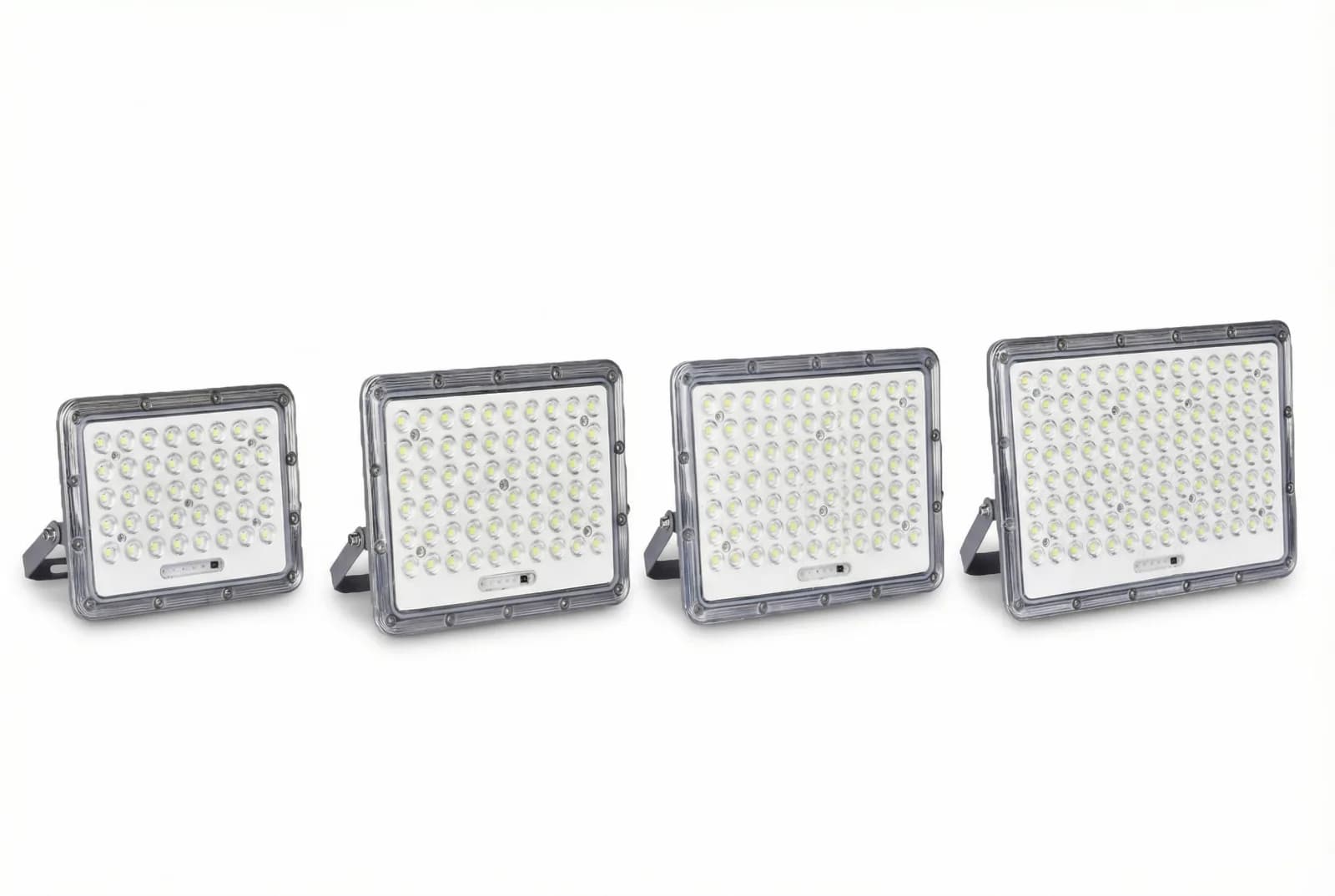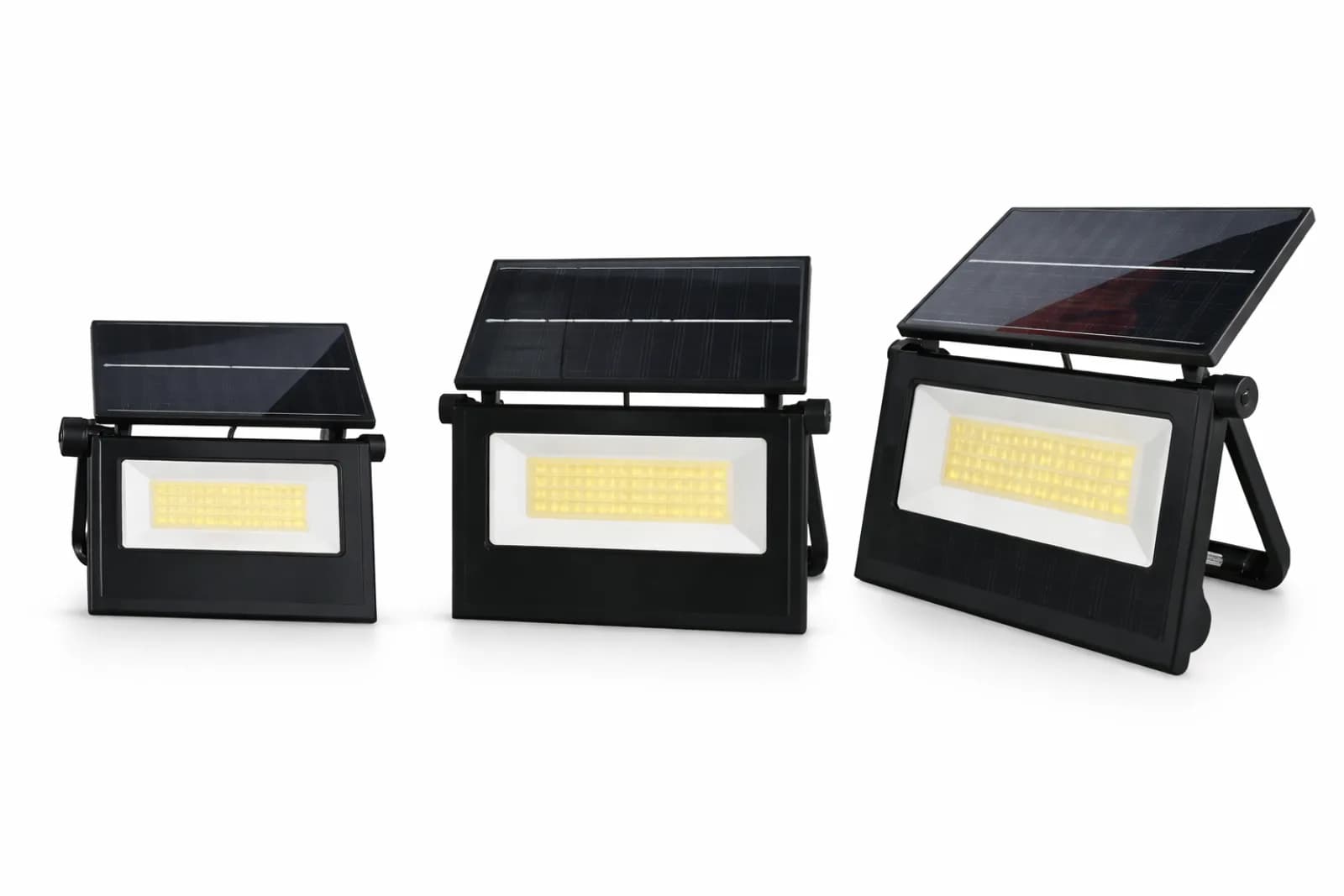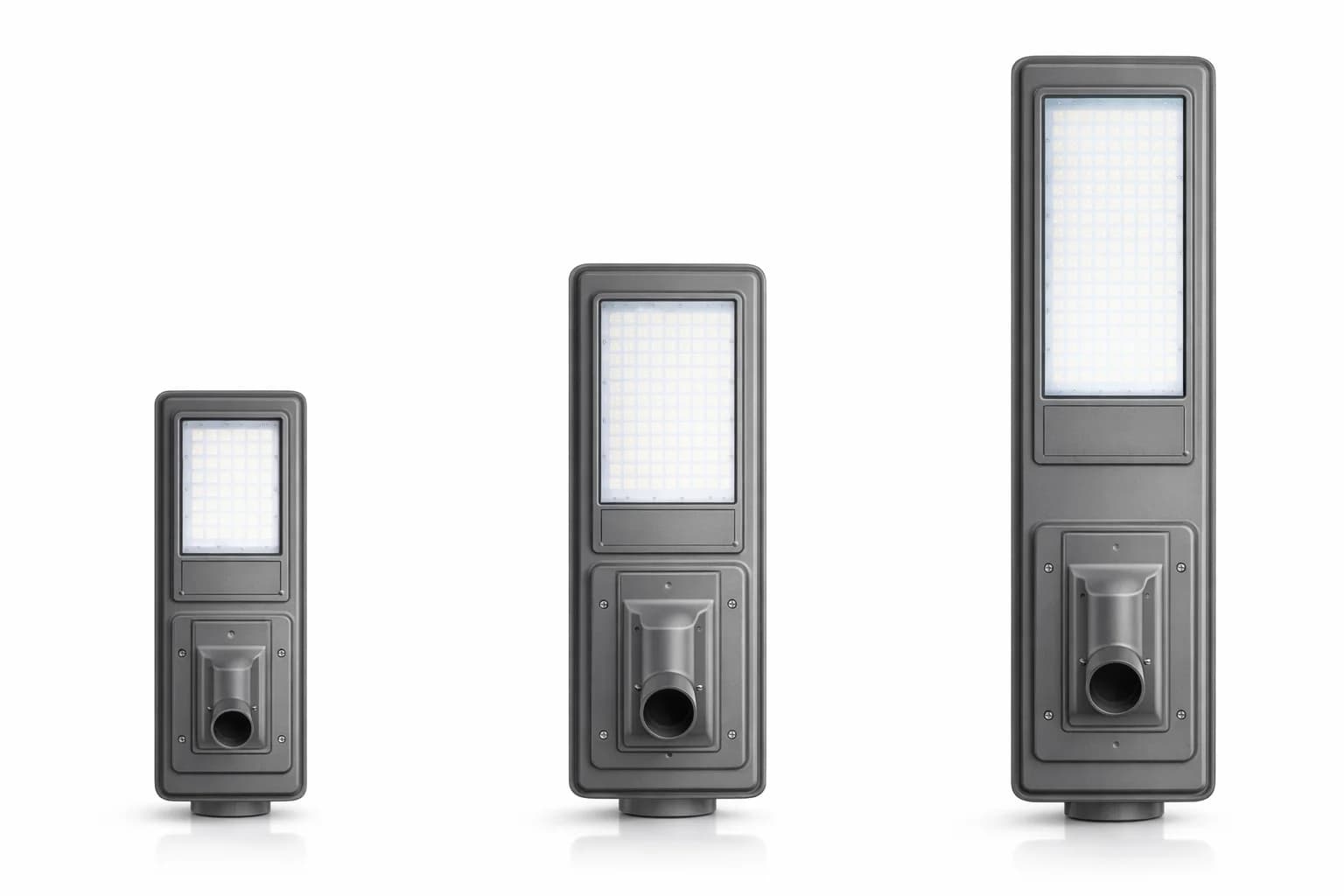
Your security lighting has one job: keep every square meter visible to cameras and patrols, every night, without exception. The moment your lights fail is the moment your facility is most vulnerable — and grid-dependent systems fail precisely during power outages, storms, and cable theft events.
We manufacture solar security lighting systems that operate completely independent of the grid. Each fixture is self-powered with its own solar panel, LiFePO4 battery, and radar motion sensor. No shared wiring means no single point of failure. No electricity bill means no ongoing cost. No grid dependency means no blackout vulnerability.
This page covers how to design a zero-blackout solar security lighting system: which fixtures to use where, how to ensure CCTV camera compatibility, and how to eliminate blind spots across your entire perimeter.
Why Most Security Lighting Fails When It Matters Most
Security lighting is not general outdoor illumination. It has requirements that most lighting suppliers — and most solar manufacturers — do not understand:
Power Outage Vulnerability
Grid-powered security lighting shares the exact weakness it is supposed to protect against. Power outages — whether from storms, equipment failure, or deliberate sabotage — kill your security lighting at the moment intruders know the facility is unprotected. UPS systems and backup generators add cost, maintenance, and their own failure modes. A security system that depends on the grid is a security system with a known, exploitable weakness.
CCTV Camera Compatibility
Security cameras are only as good as the light reaching them. Most IP cameras need minimum 15 lux for reliable color recognition — the ability to distinguish a red jacket from a blue one, read a license plate, or identify a face. Below 15 lux, cameras switch to grayscale mode, losing the detail that makes footage useful for identification and prosecution. Your lighting must deliver consistent, sufficient illumination at every camera position, not just an average across the site.
Motion Detection in Real Weather
Passive infrared motion sensors — the standard in consumer security lights — have fundamental limitations for commercial security. They detect body heat, which means they fail when ambient temperature approaches body temperature (summer), false-trigger from hot engine exhaust or HVAC vents, and cannot detect through glass, rain curtains, or blowing debris. For commercial perimeter security, passive infrared is not reliable enough.
Full-Night Operation Without Compromise
A security light that dims to 30% at midnight and dies by 4 AM is not a security light — it is a liability. Critical facilities need dusk-to-dawn operation at security-grade brightness levels. This requires battery capacity engineering, not just a bigger solar panel, and intelligent power management that prioritizes security function over energy conservation.
Perimeter Coverage Without Blind Spots
Security lighting must cover the entire perimeter uniformly. A single dark gap between fixtures is all an intruder needs. This requires proper optical engineering — beam angles, mounting heights, and spacing calculated to ensure overlapping coverage zones with no dead spots in between.
How We Solve It: Independent Architecture with Radar Detection
Every Beamfact security fixture is a self-contained power system: high-efficiency monocrystalline solar panel, oversized LiFePO4 battery bank, intelligent charge controller, commercial-grade LED module, and integrated radar motion sensor. Each unit operates independently — no shared wiring, no central controller, no single point of failure.
Radar Sensors, Not Passive Infrared
We use microwave radar motion detection across our security-grade product line. Radar measures Doppler shift in reflected microwave signals, which means:
- Works through rain, snow, fog, and dust — conditions that blind or false-trigger passive infrared sensors
- 120-degree detection field covering wide perimeter zones per fixture
- Under 0.5-second response time from motion detection to full-brightness activation
- Detects vehicles and people, not just body heat — catches cars with engines off
- Adjustable sensitivity to match environment (high for perimeter fences, reduced near public roads)
Zero-Blackout Battery Architecture
For security applications, we oversize the battery relative to standard outdoor lighting. Our security configurations deliver:
- 12+ hours of full-brightness operation on a single charge cycle
- 3-5 consecutive rainy days of autonomy at full security-grade output
- LiFePO4 chemistry for stable output across -20C to +60C operating range
- No thermal runaway risk — critical for unattended installations in harsh environments
The intelligent charge controller continues harvesting energy even under heavy overcast, generating 15-25% of rated output on cloudy days. In 5+ years of security installations across 30+ countries, we have never had a site go dark due to insufficient battery capacity.
Camera-Optimized Light Output
Our security fixtures use 5000K daylight spectrum LEDs specifically matched to the spectral sensitivity of CCTV cameras. We design every layout to achieve:
- Minimum 15 lux at every camera position for color recognition mode
- Uniform illumination with no dark gaps between fixtures
- Controlled glare so cameras see the illuminated area, not the light source
When you provide your camera positions, we calculate fixture placement to ensure every camera's field of view receives sufficient, even illumination.
Recommended Configurations by Security Scenario
We have standardized three security configurations based on the most common deployment scenarios. Each has been validated in real installations.
Warehouse / Industrial Perimeter
| Parameter | Specification |
|---|---|
| Primary Fixture | BF-SFL-27-100W Solar Flood Light |
| Luminous Output | 11,400 LM per unit |
| Mounting Height | 5-6M (fence line or pole) |
| Fixture Spacing | 20-25M |
| Lux at Ground Level | 18-25 lux average |
| Motion Detection | Radar, 120° field |
| Operating Mode | 70% baseline + 100% on radar trigger |
| Battery Autonomy | 4-5 rainy days at operating profile |
| Supplement | BF-SWL-17-3.5W Wall Lights at loading docks |
| Typical Quantity | 12-20 floods + 4-8 wall lights (200M perimeter) |
Residential Community / Gated Compound
| Parameter | Specification |
|---|---|
| Perimeter Fixture | BF-SFL-27-100W Solar Flood Light |
| Access Road Fixture | BF-SSL-22-120W Solar Street Light |
| Gate / Entrance Fixture | BF-SWL-17-3.5W Solar Wall Light |
| Perimeter Spacing | 22-28M at 5M height |
| Road Spacing | 25-30M at 7-8M height |
| Perimeter Lux Level | 15-20 lux average |
| Road Lux Level | 10-15 lux average |
| Motion Detection | Radar on perimeter floods; dusk-to-dawn on road lights |
| Battery Autonomy | 3-4 rainy days |
| Typical Quantity | 8-16 floods + 6-12 street lights + 4-10 wall lights |
Commercial Property / Office Park
| Parameter | Specification |
|---|---|
| Building Perimeter | BF-SFL-27-150W Solar Flood Light |
| Parking / Access Road | BF-SSL-22-120W Solar Street Light |
| Entrances / Exits | BF-SWL-17-3.5W Solar Wall Light |
| Building Perimeter Spacing | 18-22M at 6M height |
| Parking Area Spacing | 22-25M at 8M height |
| Perimeter Lux Level | 20-30 lux average |
| Parking Lux Level | 12-18 lux average |
| Operating Mode | Full brightness at building perimeter; economy + radar boost at parking |
| Battery Autonomy | 4-5 rainy days |
| Typical Quantity | 6-12 floods + 8-16 street lights + 6-12 wall lights |
All configurations include IP65-rated fixtures for harsh environment durability and LiFePO4 batteries rated for 2000+ charge cycles (5-7 years of nightly use).
Need a site-specific layout? Send us your site plan with camera positions and we will provide a free security lighting assessment: fixture placement, lux distribution map, and camera coverage verification. Request your free assessment.
Performance Data from Security Installations
We track field performance data across our security installation base to validate and refine our recommendations.
Measured results from active security installations:
- Average maintained lux at camera positions: 17.3 - 24.8 (measured 12 months post-install)
- Radar sensor false-alarm rate: under 2 triggers per night (after sensitivity calibration)
- Battery health after 2 years: 92-96% original capacity (LiFePO4)
- Blackout incidents across all security installations: zero
- Average radar response time (detection to full brightness): 0.3 seconds
Certifications relevant to security installations:
- CE (European Conformity)
- IP65 (BF-SFL-27 Series — dust-tight, water jet protected)
- RoHS (Environmental Compliance)
- UN38.3 (Battery Transport Safety)
We provide all test reports and certificates with your quotation. For projects requiring additional regional certifications, we can arrange testing on request.
Solar vs Grid-Powered Security Lighting: Why Independence Wins
The cost comparison matters, but for security lighting, reliability architecture is the real differentiator.
| Factor | Grid-Powered | Solar (Ours) |
|---|---|---|
| Power Outage Behavior | Lights go dark (unless UPS installed) | No interruption — independent power |
| Cable Theft / Sabotage | Single cable cut blacks out entire section | Each unit independent — no shared vulnerability |
| Installation Time | 2-4 weeks (trenching + permits + inspection) | 1-3 days (bolt and activate) |
| Expansion | Re-trench, re-wire, upgrade panel capacity | Add poles anywhere, immediately |
| Remote Site Feasibility | Requires grid infrastructure or generator | Works anywhere with sunlight |
| Single Point of Failure | Breaker, cable, transformer, grid | None — each unit self-contained |
| Monthly Electricity Cost | $150-500 (20-fixture perimeter) | $0 |
| 5-Year Total Cost (20 fixtures) | $18,000-35,000 | $10,000-18,000 |
The security argument is simple: a lighting system that depends on external power has a known, exploitable failure mode. Solar security lighting eliminates that failure mode entirely. Each fixture is its own microgrid — independent power generation, independent storage, independent operation. There is nothing to cut, nothing to switch off, nothing that fails when the grid fails.
For a detailed technical comparison of solar vs AC-powered flood lights, read: AC vs Solar Flood Lights: Honest Comparison.
Get Your Free Security Lighting Assessment
Tell us about your site and we will deliver:
- Security lighting layout — fixture positions optimized for your camera placements
- Lux distribution map — confirming 15+ lux coverage at every camera position
- Blind spot analysis — identifying and eliminating gaps in your perimeter coverage
- Budget estimate — fixtures, poles, mounting hardware, shipping, and total project cost
Ready to start?
- Send us your site plan with camera positions for a custom security lighting assessment (response within 48 hours)