

Most battery comparison articles are written by people who sell one chemistry and trash the other. We are in a different position. Beamfact manufactures solar street lights with 3.2V LiFePO4 cells and solar wall lights with 3.7V lithium-ion cells. We chose each chemistry deliberately, based on engineering tradeoffs we validate in our own lab and across thousands of field installations. This is not a theoretical comparison — it is a production decision we make every day.
Manufacturer Verdict: Which Battery Should You Specify?
For outdoor solar lights above 10 W, specify LiFePO4 unless size and upfront price are the only constraints. The decisive factor is not cell price; it is cycle life under nightly charge/discharge, replacement labor, and field safety.
| Buyer Question | LiFePO4 Answer | Lithium-Ion/NMC Answer | Procurement Decision |
|---|---|---|---|
| Will it cycle every night? | 2,000+ cycles, suited to daily outdoor duty | 500-800 cycles, faster degradation | Choose LiFePO4 for street/flood lights |
| Is it mounted high or hard to service? | Fewer battery replacements | More truck rolls and labor | Choose LiFePO4 |
| Will it face heat, cold, or direct sun? | Wider operating range and safer chemistry | Higher heat sensitivity | Choose LiFePO4 |
| Is the fixture small and decorative? | Larger/heavier than needed | Compact and lower cost | Lithium-ion can be acceptable |
| Is 10-year TCO the buyer's metric? | Lower total battery + labor cost | Lower upfront cost only | Choose LiFePO4 |
Battery Chemistry 101: What Is Actually Inside
Before comparing, you need to understand what these labels mean. "Lithium-ion" is a family, not a single chemistry. The two types used in solar lighting are fundamentally different materials with different behaviors.
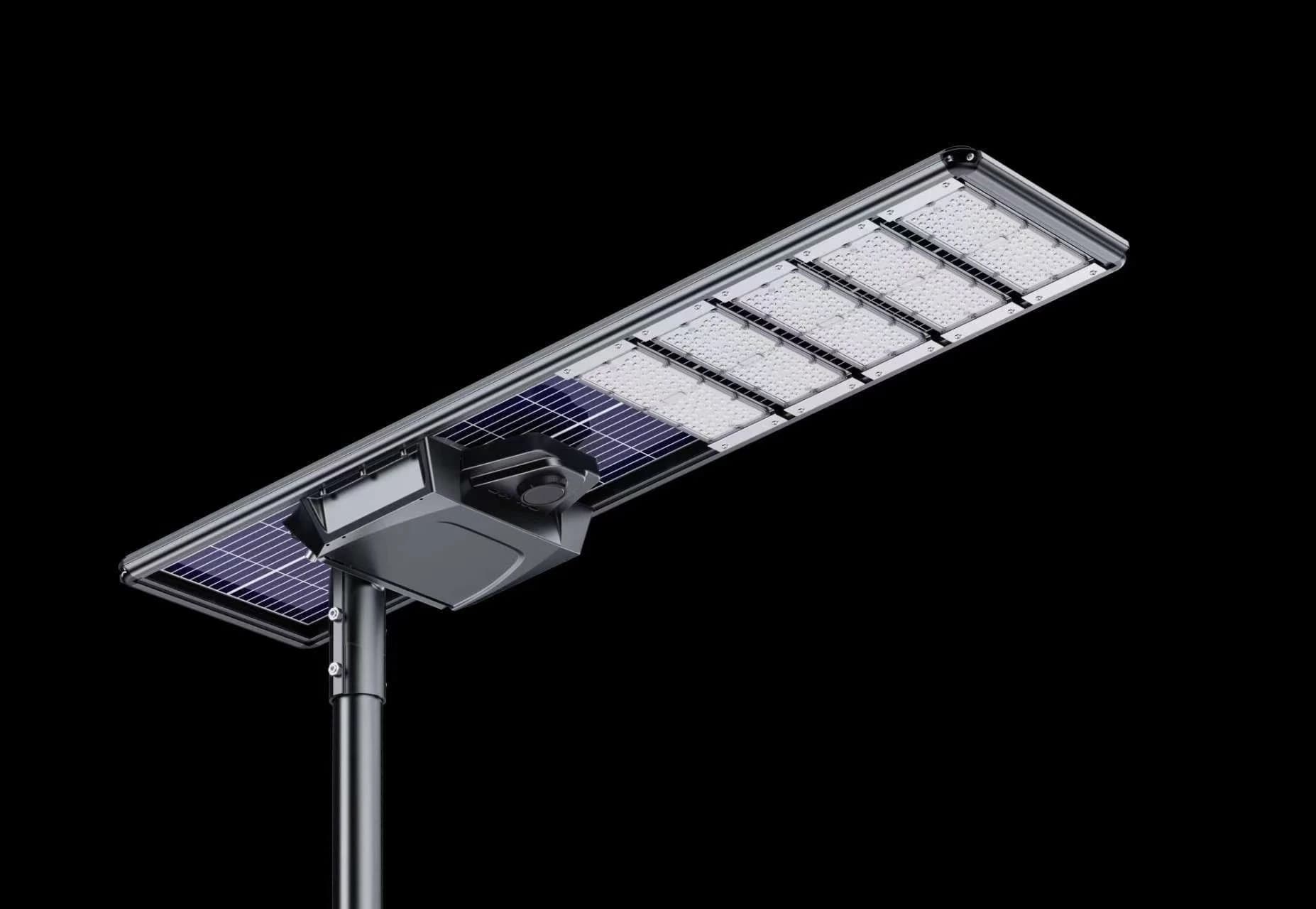
LiFePO4 (Lithium Iron Phosphate) uses an iron-phosphate cathode with a nominal voltage of 3.2V per cell. The crystal structure is exceptionally stable — the iron-phosphate bond resists oxygen release even under extreme abuse. This is the chemistry in our BF-SSL-20 Series, BF-SSL-21 Series, and BF-SSL-22 Series street lights, our BF-SFL-26 Series and BF-SFL-27 Series flood lights, and all our insect killer lamps.
NMC/NCM Lithium-Ion uses a nickel-manganese-cobalt cathode with a nominal voltage of 3.7V per cell (the common 18650 format). Higher energy density, but the layered oxide structure is thermally less stable. This is the chemistry in our BF-SWL-17-1W, BF-SWL-17-1.8W, and BF-SWL-17-3.5W wall lights, and our BF-SGL-18-S1, BF-SGL-18-S2, BF-SGL-18-R1, and BF-SGL-18-R2 landscape lights.
Lead-acid still appears in cheap solar street lights. We stopped using it three years ago. The comparison data below explains why.
Head-to-Head Comparison: LiFePO4 vs NMC vs Lead-Acid
Every number in this table comes from either our battery lab testing or manufacturer datasheets from the cell suppliers we use in production.
| Parameter | LiFePO4 (3.2V) | NMC/NCM Lithium (3.7V) | Lead-Acid |
|---|---|---|---|
| Cycle Life | 2,000+ cycles | 500-800 cycles | 300-500 cycles |
| Practical Lifespan | 5-8 years | 2-3 years | 1-2 years |
| Operating Temperature | -20 C to 60 C | -10 C to 45 C | -5 C to 40 C |
| Thermal Runaway Risk | None | Moderate | Low |
| Energy Density | 90-120 Wh/kg | 150-250 Wh/kg | 30-50 Wh/kg |
| Cost Per Cycle | Lowest | Medium | Highest |
| Self-Discharge Rate | Less than 3%/month | 5-8%/month | 15-20%/month |
| Nominal Cell Voltage | 3.2V | 3.7V | 2.0V |
| Weight (per kWh) | 8-11 kg | 4-7 kg | 20-33 kg |
| Depth of Discharge (usable) | 80-90% | 70-80% | 50% |
The standout numbers are cycle life and operating temperature. A solar street light charges and discharges once per day, every day, 365 days per year. After 3 years, that is 1,095 cycles. An NMC cell rated for 500-800 cycles is already degraded. A LiFePO4 cell rated for 2,000+ cycles is barely halfway through its life.
Why We Use LiFePO4 for Street Lights and Flood Lights
Our street light batteries range from 144 Wh to 480 Wh. Our flood light batteries range from 48 Wh to 576 Wh. These are substantial energy packs mounted on poles exposed to direct sun, desert heat, tropical storms, and freezing nights. Here is why LiFePO4 is the only chemistry that makes engineering sense for these applications.
Cycle Demand Is Relentless
A street light runs every single night. There are no weekends, no holidays, no off-season. At 365 cycles per year, a LiFePO4 battery with 2,000+ cycle life delivers 5-6 years of service before capacity degrades below 80%. An NMC battery at 500-800 cycles degrades below 80% capacity in 1.5-2 years. Replacing a battery on a 6-meter pole in a rural African village is not a $20 swap — it is a truck, a technician, a ladder, and a full day of work. The battery replacement cost often exceeds the original battery price.
Thermal Extremes Are Unavoidable
Solar street lights bake in direct sunlight. Internal enclosure temperatures routinely hit 50-60 C in summer across our Middle East and African installations. NMC cells accelerate degradation above 45 C and face thermal runaway risk at extreme temperatures. LiFePO4 cells operate comfortably up to 60 C with negligible additional degradation. On the cold end, our installations in northern China experience -15 C winters. NMC cells lose 30-40% capacity at -10 C. LiFePO4 cells maintain usable capacity down to -20 C.
Safety Is Non-Negotiable at Scale
A street lighting project deploys hundreds or thousands of units across a city. Every unit contains a lithium battery at height. LiFePO4 chemistry physically cannot undergo thermal runaway — the iron-phosphate crystal structure does not release oxygen when overheated. NMC chemistry can. When you are responsible for 2,000 battery packs on poles above people's heads, that difference matters. Our LiFePO4 packs include a BMS with overcharge, over-discharge, overcurrent, and temperature protection. But the chemistry itself provides the fundamental safety margin.
Self-Discharge Protects Rainy Season Performance
During extended overcast periods, batteries may not fully recharge for days. LiFePO4 self-discharges at less than 3% per month — negligible. NMC self-discharges at 5-8% per month. After a week of monsoon cloud cover, that difference translates directly into extra hours of light. Our runtime analysis covers how we design autonomy into our systems, and the low self-discharge rate of LiFePO4 is a core part of that engineering.
Why We Use Standard Lithium-Ion for Wall Lights and Landscape Lights
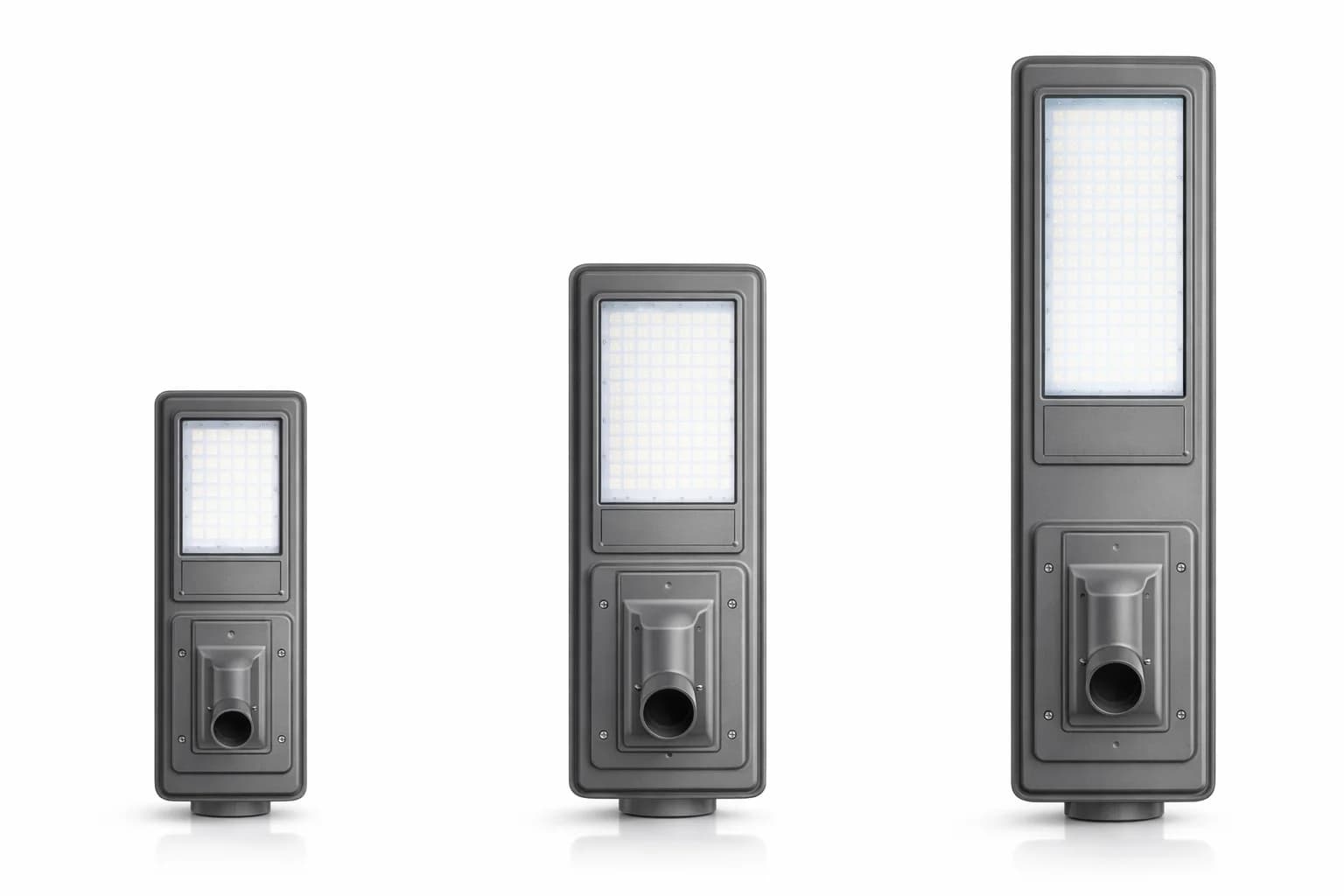
If LiFePO4 is so superior, why not use it everywhere? Because engineering is about tradeoffs, not absolutes. Our wall lights (BF-SWL-17-1W, BF-SWL-17-1.8W, BF-SWL-17-3.5W) and landscape lights (BF-SGL-18-S1, BF-SGL-18-S2, BF-SGL-18-R1, BF-SGL-18-R2) use 3.7V lithium-ion cells for sound technical reasons.
Capacity Requirements Are Small
Our wall lights use 1,200-2,500 mAh batteries. Our landscape lights use 2,200-4,400 mAh batteries. These are tiny cells — the difference in cycle life between LiFePO4 and NMC matters far less when the replacement cell costs $1-2 and sits at eye level in a fixture you can open with a screwdriver.
Weight and Size Constraints Are Tight
Wall lights and landscape lights are compact, lightweight fixtures. NMC lithium-ion offers 150-250 Wh/kg compared to 90-120 Wh/kg for LiFePO4 — roughly double the energy density. For a small decorative fixture where every gram and cubic centimeter matters, NMC delivers adequate capacity in a smaller, lighter package.
Thermal Exposure Is Moderate
Wall-mounted fixtures sit in shade or partial shade for most of the day. Landscape lights are at ground level where convection cooling is better. Neither application subjects batteries to the extreme temperatures that pole-mounted street lights endure. The NMC operating range of -10 C to 45 C is sufficient for these mounting conditions.
Cost Sensitivity Is Higher
Decorative lighting is a price-sensitive market. Our wall lights retail at a fraction of street light prices. The 15-20% cost premium of LiFePO4 cells, while justified for a $150 street light, is harder to justify for a $15 wall light where the battery represents a smaller share of total cost. Standard 18650 lithium-ion cells give us the price point these product categories demand.
Cost-Per-Year Analysis: The Number That Matters
Upfront battery cost is a misleading metric. The number that matters is cost per year of service. Here is the math for a typical 30 W solar street light battery pack:
| Metric | LiFePO4 | NMC Lithium-Ion | Lead-Acid |
|---|---|---|---|
| Battery Pack Cost | $22-28 | $15-20 | $10-15 |
| Rated Lifespan | 5-8 years | 2-3 years | 1-2 years |
| Replacements in 10 Years | 1 | 3-4 | 5-8 |
| Total Battery Cost (10 yr) | $44-56 | $60-80 | $50-120 |
| Replacement Labor (10 yr) | $30-50 | $90-200 | $150-400 |
| Total 10-Year Battery TCO | $74-106 | $150-280 | $200-520 |
LiFePO4 costs 15-20% more upfront but 60-70% less over 5 years when you factor in replacement frequency and labor. Over 10 years, the savings are even more dramatic because LiFePO4 typically needs only one replacement while NMC needs three to four. For a 500-unit municipal project, that translates to hundreds of avoided truck rolls and technician hours. Our cost breakdown guide details the full BOM-to-installed economics.
How to Verify Battery Claims from Suppliers
The solar lighting industry has a serious problem with battery misrepresentation. We have seen competitors label NMC cells as LiFePO4, overstate capacity by 50-100%, and claim cycle life numbers with no supporting data. Here is how to verify what you are actually buying.
Ask for the Cell Brand and Model Number
Legitimate manufacturers use cells from identifiable brands (EVE, CATL, BYD, Lishen, BAK for LiFePO4; Samsung SDI, LG, Panasonic, or reputable Chinese brands for NMC). If a supplier cannot tell you the cell brand and model number, they either do not know (bad sign) or do not want you to verify (worse sign).
Request the BMS Specification Sheet
Every quality battery pack includes a Battery Management System. The BMS spec should detail overcharge protection voltage (3.65V for LiFePO4, 4.2V for NMC), over-discharge cutoff, maximum charge/discharge current, temperature protection thresholds, and cell balancing method. If the supplier cannot provide this document, the pack likely uses a bottom-tier BMS or none at all.
Demand a Cycle Test Report
A cycle test report from a third-party lab shows capacity retention after a specific number of charge-discharge cycles at defined conditions (typically 1C rate, 25 C, 80% DoD). Reputable cell manufacturers publish these curves. If your supplier claims 2,000 cycles but cannot show a test report, the number is marketing fiction.
Verify Voltage to Confirm Chemistry
This is the simplest check. Measure the open-circuit voltage of a fully charged cell. LiFePO4 reads approximately 3.4V (never above 3.65V). NMC lithium-ion reads approximately 4.0-4.2V. If a supplier claims LiFePO4 but the cell measures 4.1V, it is NMC relabeled. We have seen this in competitor products disassembled during our competitive analysis.
Check Battery Weight
LiFePO4 is heavier than NMC for the same capacity. A genuine 30 Ah LiFePO4 pack weighs approximately 3.5-4 kg. If the claimed 30 Ah LiFePO4 pack weighs 2 kg, either the capacity is overstated or the chemistry is not LiFePO4. Weigh the pack and compare against known specifications.
When to Choose LiFePO4 Solar Street Lights
Choose LiFePO4 for any application where the battery must survive years of daily cycling in harsh outdoor conditions:
- Municipal street lighting: Thousands of units, maintenance cost is the dominant concern. LiFePO4 cuts battery-related maintenance by 60-70%.
- Highway and rural road lighting: Remote locations where every replacement visit is expensive. Our BF-SSL-20 / 21 / 22 Series use LiFePO4 for exactly this reason.
- Solar flood lighting: High-power applications with large battery packs where safety and longevity justify the premium. Our BF-SFL-26 Series and BF-SFL-27 Series flood lights use LiFePO4 packs up to 576 Wh.
- Hot climate installations: Middle East, Africa, South Asia — anywhere ambient temperatures routinely exceed 40 C.
- Projects requiring long warranty periods: We offer 5-year battery warranties on our LiFePO4 products. That is only possible because the chemistry supports it.
When Standard Lithium-Ion Is the Right Choice
Standard lithium-ion is acceptable — and sometimes preferable — for applications with lower demands:
- Decorative wall lighting: Small capacity, moderate environment, price-sensitive. Our wall light range uses 3.7V lithium-ion cells from 1,200 to 2,500 mAh.
- Garden and landscape lighting: Similar profile to wall lights — compact form factor and moderate duty cycle.
- Indoor solar-charged devices: No extreme temperatures, infrequent deep discharge.
- Short-lifecycle products: If the product is expected to be replaced in 2-3 years anyway, the cycle life advantage of LiFePO4 is moot.
The Lead-Acid Trap: Why Cheap Solar Lights Fail
We still see lead-acid batteries in the cheapest solar street lights on Alibaba. The appeal is obvious: a 12V 20Ah lead-acid battery costs $8-12 versus $20-28 for an equivalent LiFePO4 pack. But the economics collapse within the first year.
Lead-acid can only discharge to 50% without accelerated degradation, effectively halving usable capacity. At 300-500 cycle life with daily use, the battery dies in 10-18 months. It weighs 3-4 times more than lithium alternatives, stressing the mounting structure. It performs poorly below 5 C and above 40 C. And it contains toxic lead and sulfuric acid, creating disposal problems.
If you encounter a solar street light priced suspiciously low, check the battery chemistry. Lead-acid is often the hidden cost-cutting measure that guarantees early failure. Our guide on how to choose a solar street light covers additional red flags to watch for.
Our Engineering Recommendation
After manufacturing both chemistries across multiple product lines and monitoring field performance for years, our position is straightforward:
For any solar light rated above 10 W that will operate outdoors year-round, use LiFePO4. The cycle life, thermal tolerance, safety margin, and total cost of ownership make it the only defensible engineering choice for professional-grade solar street lights and flood lights.
For small decorative lights below 10 W in moderate environments, standard lithium-ion is acceptable. The energy density advantage, lower upfront cost, and compact form factor make it the practical choice for wall lights and landscape fixtures where cycle life demands are lower.
This is not a marketing position. It is a production decision backed by our own battery lab data, field failure records, and warranty claim history across five years and thirty-plus countries.
Explore our solar street light range (all LiFePO4) or solar wall lights (lithium-ion) to see how we apply this logic in practice.